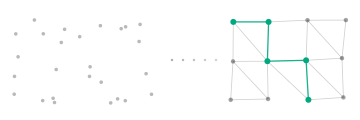
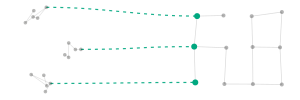
Map sources to terms
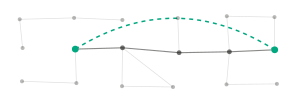
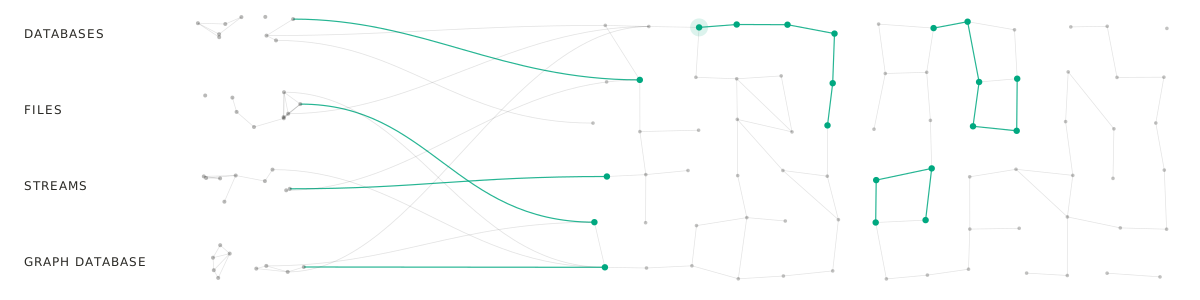
Mappings describe how tables, files and streams point to classes and relations of the ontology. This turns many sources into one shared graph. The data stays in its systems or is taken over into the built-in graph database.
Makor Logos builds a semantic layer over your data sources and integrates them into one shared, queryable graph. Databases, files and streams then speak the same terms, and every answer brings its provenance with it. The data stays in its sources or sits in the built-in graph database where speed matters.
Mappings describe how tables, files and streams point to classes and relations of the ontology. This turns many sources into one shared graph. The data stays in its systems or is taken over into the built-in graph database.
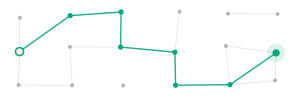
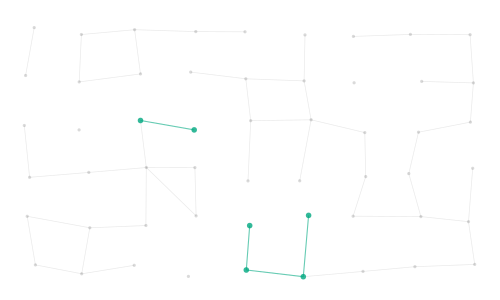
Logos adds what follows from the ontology: class membership, part-whole relationships, temporal sequence. The dataset itself remains unchanged.
For every result, Logos supplies the chain: which source, which mapping, which rule. The audit trail starts at the first row, not at the report.
Logos connects databases, files and streams and makes them queryable as one graph. Whatever has to be available instantly sits in the built-in graph database, everything else stays in the source systems.
Connected sources remain the authoritative version of their data. Whatever sits in the graph database keeps its proof of provenance.
For you, it stays one query, no matter how many sources are behind it and how large they are.
Ten graph, RDF and relational systems ran on the same machine with the same data. Every answer was checked against the expected result.
Two-hop graph join, same data, same machine. Shorter is better: 14 times faster than the leading graph database.
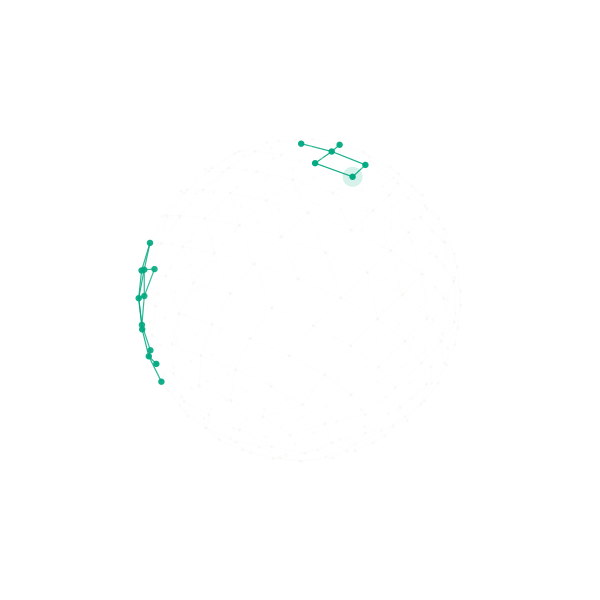
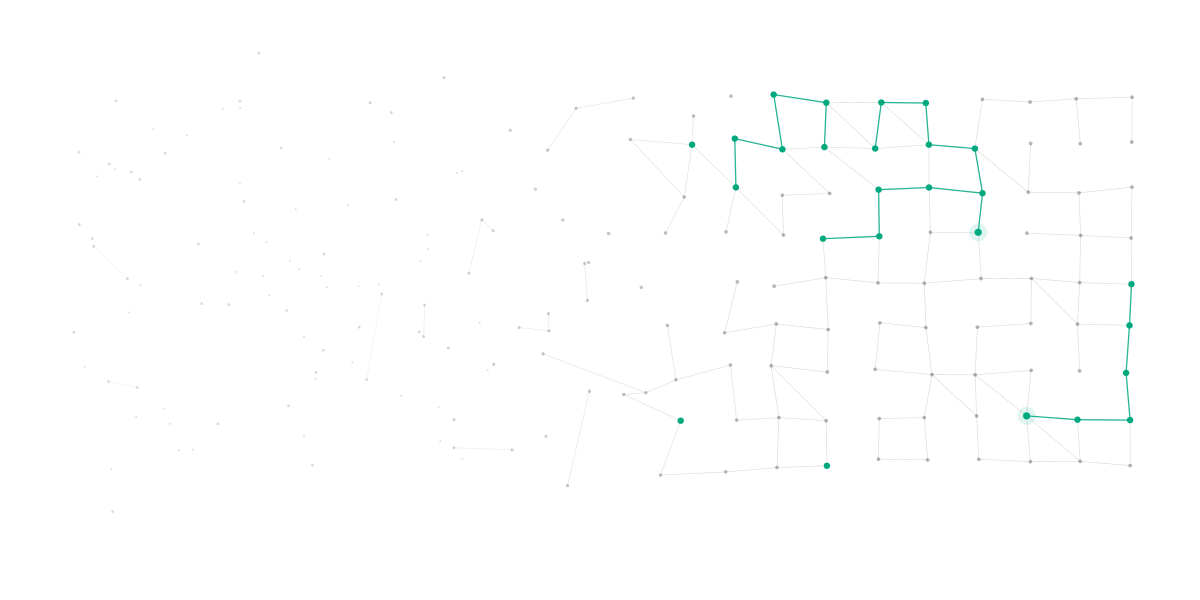
Semantic tools often reach their limits with large datasets, while big data tools know nothing about terms. Makor Logos combines both: ontology, reasoning and provenance, distributed across a cluster and designed for data volumes in the petabyte range.
Logos runs distributed across several machines. As the dataset grows, more nodes are added instead of a single server reaching its limits.
Analyses run across all the data, not across an extract that happens to be manageable.
What follows from the ontology is available even across very large graphs, not just in the prototype.
Even in large datasets, every statement can be traced back to its source.
Data in the source, not in Makor Logos. An answer costs as much as the answer is large, not as much as the source.
Extrapolated from measurements on one node, with a cautious scaling efficiency of 50 to 70 %. Not measured in a cluster.
Vehicle F-112 belongs to unit V-4.
InferredA result without provenance is a claim. Logos records which source, which mapping and which rule led to a statement. That keeps a decision explainable, even when nobody asks any more.
No data lake as a prerequisite, no moving of existing data. Logos reads through mappings from the systems you run today. The built-in graph database is an option, not a condition.
Ontologies in RDFS and OWL 2, validation rules in SHACL, queries in SPARQL 1.1 and GQL according to ISO/IEC 39075. Of the 981 tests in the W3C test suite for SPARQL, 899 pass and none fail.
What Logos infers follows from defined terms and rules. Every inference can be traced back to its source.
Developed, operated and hosted in Germany. No routing through third countries, no externally controlled services in the data path.
Logos means word, sense and order all at once, and it is in every “-logy”, including ontology. That is exactly what the semantic layer does: it gives scattered data an order and a sense.
For AI, Logos is the memory. Language models and agents draw on proven facts and defined terms instead of guessing. Every answer brings its provenance with it: which source, which mapping, which rule.
Bring a question that today fails because of scattered sources. We will show you how Logos makes it answerable.
Contact info@bonn-systems.com